
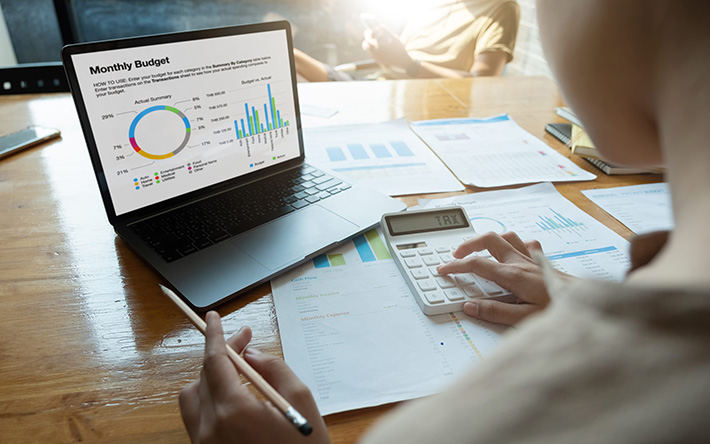
A month that is busy ought to be seen as good news, but many small business owners end up wondering why their bank balance has not changed much. Although sales were made and the employees were paid, another batch of expenses ate up what had appeared to be a solid profit.
An effective budget is useful in showing where the money is being spent and in telling what the business can afford in the way of future expenses. Preparing a budget involves more than simply transferring last year’s figures into a spreadsheet.
By working with a CPA, you can draw up a plan which mirrors the way your business actually operates and, at the same time, keep the plan useful as the circumstances change.
How can a CPA assist a small business in preparing and managing a budget?
A CPA can help small businesses build and manage a budget by reviewing financial records, estimating revenue and expenses, planning for taxes, and forecasting cash flow. They can also identify spending trends, compare actual results against projections, and recommend adjustments to keep the business financially on track.
Here we’ll go through what should be included in a small business budget and see why a CPA can be a valuable asset to the process.
Start With the Numbers You Have
Before you decide how much you would like to earn, make certain that you know both how much your business is currently earning and how much it’s spending.
Collect your income statements, your bank records, your payroll reports, the invoices that are still outstanding, and your loan details. You should first deal with any problems in your records, such as transactions that are duplicated or expenses that have been allocated to the wrong categories.
The Small Business Administration stresses the importance of good bookkeeping and lists certified public accountants as one type of accounting assistance that can be tailored to the requirements of a business.
When preparing a budget, accurate records provide you with a starting point and help you to deal with practical questions such as which services offer the highest margins, when sales tend to slow down, and how much it actually costs to keep the business running.
Budget for the Expenses That Are Easy to Miss
Monthly expenses like rent are easy to account for. An annual software renewal, however, might slip your mind until the bill arrives.
A budget prepared for a small business should provide for fixed costs, those expenses which vary in accordance with sales, and for occasional purchases. In the case of your business, these could be:
● Fees, insurance, utilities, and software subscriptions
● Wages, the payroll taxes, and the employee benefits
● Fees relating to inventory, materials, shipping, and payment processing
● Marketing, along with professional services and the maintenance of equipment
● Payments on taxes, on debt, and the purchases of equipment as planned
Certain cash payments are handled differently in financial statements. For instance, when the principal of a loan is repaid, the cash is reduced but it is usually not regarded as an operating expense. A certified public accountant could assist in separating out these items so that your spending plan and profit expectations are logical.
You should also take your own payment into account. Although the right course of action will vary according to your business structure, the amount of cash you anticipate taking home should still be included in the plan.
Set Revenue Expectations You Can Explain
“Sell more this year” is a target, and a revenue estimate requires something more solid to back it.
Begin by looking at past sales, the seasonal trends, existing contracts, and current capacity. If you are aiming to boost revenue, then determine where this increase will be achieved. Will it be due to higher prices, more appointments, or a new product?
Let us imagine that a landscaping business wishes to acquire twenty maintenance customers. These customers might call for an extra employee, more fuel, and additional equipment as well. The budget must take into account the cost of serving them together with the anticipated income.
A certified public accountant can assist you in checking your assumptions and in comparing various scenarios.
Keep Cash Flow in the Conversation
Profit and cash on hand do not always occur at the same time.
Suppose that you send out an invoice of $12,000 at the end of the month, the payroll being due on Friday. In accordance with accrual accounting, that revenue might already be included in your results, even though the customer has not made payment.
A cash flow forecast shows the times when money is expected to enter and when it is expected to leave the business. A certified public accountant who provides this service can assist you in identifying busy periods, in planning tax reserves, and in deciding whether payment terms require attention.
The quantity of cash reserves that you should have will vary according to your expenses, the frequency of your payments, and the risks involved in your business. Instead of choosing a random buffer, aim for a figure that you’ll be able to justify and keep.
Give Your Budget a Regular Checkup
Each month take the time to compare your budget with the actual figures, and don’t just consider whether you have spent too much or too little.
The rise in material costs could be due to increases from suppliers. The higher payroll may result from overtime caused by scheduling problems. Lower sales could indicate that there are fewer customers or a shift towards cheaper purchases.
The differences therefore require different responses.
A certified public accountant would be able to assist in looking into significant changes and in updating your forecast. Before hiring someone to do this, find out if their services include budgeting and regular reviews.
Related Questions
How Often Should a Small Business Review Its Budget?
A monthly review is a good place to start, and companies that have irregular cash flow or are experiencing quick changes might also find it useful to carry out weekly cash checks.
What Is the Difference Between a Budget and a Forecast?
A budget establishes financial targets for a given period, while a forecast makes use of up-to-date information to revise the expected results.
Is Hiring a CPA Worth the Cost for a Small Business?
Yes. Hiring a CPA is worth the cost because knowing where your business stands financially, what you might be overlooking, and where your money could work harder can be far more valuable than the fee itself.
Plan Smarter With Professional CPA Guidance
Your budget should enable you to deal with all the usual questions, such as whether you can afford to hire another employee, whether that purchase should be put off, and how much cash should remain available.
At Tax Avenger in Canton, MI, we help small business owners make sense of their finances through professional CPA services, small business accounting, tax planning, and financial guidance. Our goal is to help you understand where your money is going, identify opportunities to improve cash flow, and make informed decisions that support your business’s growth.
Contact us today to schedule a consultation with an experienced CPA so you can take greater control of your business finances.