
If you run a small business, the 1099 season has a way of showing up right when you’re trying to finish the year strong. You pay contractors all year, then January hits, and you’re suddenly hunting for addresses, taxpayer ID numbers, and totals you wish you’d tracked more cleanly.
The best part is that this is fixable with a light process. Not a complicated one. Just enough structure that you’re not doing detective work at the end of the year.
What The 1099-NEC Is For
Form 1099-NEC is commonly used to report nonemployee compensation, such as payments to independent contractors. The IRS instructions confirm the filing deadline for 1099-NEC is January 31.
A practical note: “1099 work” isn’t only for large companies. If you pay contractors for services, this applies to you. It also applies even when you pay through normal business operations, because the IRS uses these forms for matching and compliance.
Why The W-9 Matters More Than The 1099
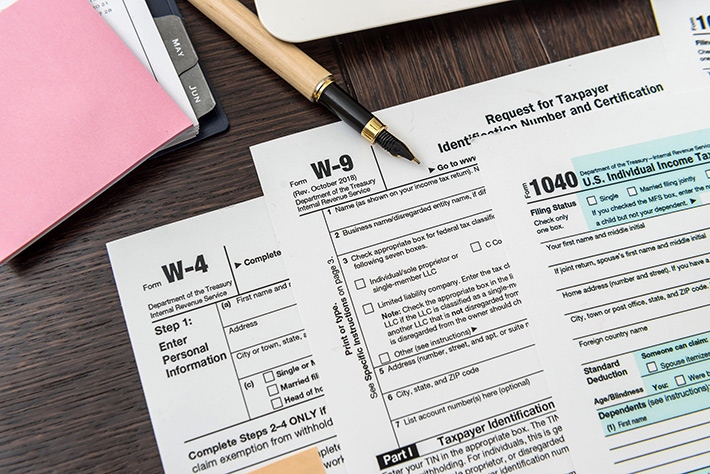
The W-9 is the form you collect from a vendor to obtain their legal name and taxpayer identification number (TIN). That one step prevents most of the 1099 scramble.
It also helps you avoid a more painful issue: backup withholding. If a vendor doesn’t provide a correct TIN, or the IRS notifies you that the TIN is incorrect, the payer can be required to withhold 24% from reportable payments until the issue is fixed.
That’s not a theoretical risk. It becomes your administrative problem, and it’s the kind of problem that’s easier to prevent than to clean up.
Michigan Adds A Second Layer People Miss
If your business has a Michigan impact, you may also have state filing requirements for “income record forms.” Michigan Treasury states that state copies of W-2s and 1099s with a Michigan impact must be filed with the Treasury, and that Michigan generally follows federal guidelines.
This is where many small businesses slip. They focus on the IRS filing, then forget the state copy requirement until they’re already behind.
A Straightforward Workflow That Works
This is the low-drama process most small businesses can stick to.
• Collect a W-9 before the first payment. Don’t wait until December. If you don’t have the W-9, don’t treat the vendor as “fully set up.”
• Track payments by vendor throughout the year. You’re not trying to build a perfect accounting system overnight. You’re trying to be able to answer, “How much did we pay this vendor this year?” without reconstructing it from memory.
• Decide early who is a contractor vs an employee. Misclassification is a different issue, but it tends to surface during the 1099 season because you’re looking at who got paid for labor.
• Reconcile in early January, not late January. The IRS deadline for 1099-NEC is January 31. Waiting until the last week is how mistakes happen.
• File federal and Michigan copies on time. Michigan Treasury notes that most income record forms are due on the same date the federal government requires.
What Happens If You File Late Or File Wrong
The IRS charges information return penalties for failing to file correct information returns on time and for failing to provide correct payee statements on time. In real life, this often shows up as stacked penalties across multiple vendors, plus time spent fixing forms and answering notices.
This is why it’s worth treating 1099s like a one-time small project, the right way, instead of a fire drill every year.
Backup Withholding: The Part Most Owners Don’t Expect
Backup withholding isn’t something you “choose.” In certain situations, it becomes required. The IRS explains that backup withholding is generally required when the payer doesn’t receive the payee’s TIN in a timely or accurate manner, and the current rate is 24%.
If you’ve been paying a contractor without a W-9 and you later discover the TIN is missing or incorrect, you can end up in a position where you must start withholding from future payments until the issue is remedied.
The practical takeaway is simple: collecting W-9s up front is not paperwork for the sake of paperwork. It keeps you out of a mess.
A Quick “Do We Need A 1099?” Reality Check
Many business owners waste time guessing. If you’re unsure, a CPA can review your vendor list and tell you which vendors should receive a 1099-NEC and which don’t belong on it. It’s faster than fixing it after the fact, and it’s usually cheaper than penalties and re-filings.
Closing Thought
1099s don’t have to be a January nightmare. If you collect W-9s before you pay, track totals as you go, and reconcile early, the whole process becomes routine. If you want help cleaning up contractor records, preparing 1099-NECs correctly, and handling Michigan filing requirements so nothing gets missed, Tax Avenger in Canton can review your vendor list and set up a simple, repeatable process for next year.
Trusted Tax and Accounting Support for Michigan Small Businesses
Tax Avenger provides business tax preparation, tax planning, bookkeeping, accounting, and other support services designed to help Michigan small businesses stay organized and prepared. Call and speak to an experienced CPA today.